It looks like Senna, the Movie is being released in Japan first. Japanese title:
アイルトン・セナ 音速の彼方へ
Go to the official movie website to see a clearer trailer:
http://senna-movie.jp/
There is a trailer posted to youtube here
It's being released on Oct 8th in very limited theaters in Japan. I'll probably go see it in Odaiba Cinema Mediage in Tokyo.
Showing posts with label documentary. Show all posts
Showing posts with label documentary. Show all posts
Friday, September 03, 2010

Monday, February 22, 2010
The Secret Life of Chaos

A BBC4 documentary The Secret Life of Chaos was on TV not too long ago. Now someone has uploaded it on youtube.
Key words:
Alan Turing
chaos theory
evolution
butterfly effect
computer
patterns
Sunday, November 22, 2009
Cosmos makes me sad
Watching the late great astronomer Carl Sagan's Cosmos: A Personal Voyage always makes me incredibly incredibly sad.
Is it because of the choice of music?
Is it because of Sagan's unique mannerism?
Is it because he is no longer with us?
Is it because of the vastness of the cosmos?
Is it because we drag our collective feet?
Introduction
The entire series can be viewed on youtube here
Pale Blue Dot
Is it because of the choice of music?
Is it because of Sagan's unique mannerism?
Is it because he is no longer with us?
Is it because of the vastness of the cosmos?
Is it because we drag our collective feet?
Introduction
The entire series can be viewed on youtube here
Pale Blue Dot
Wednesday, December 24, 2008
imagine 10d
On a flat object (2d, like a piece of paper), the human mind is able to perceive a drawn 3d image, which is not actually 3d.
The following video shows that with more imagination, you can get even further, all the way to the 10th dimension. Be forewarned, it induces good brain exercises.
The following video shows that with more imagination, you can get even further, all the way to the 10th dimension. Be forewarned, it induces good brain exercises.
Tuesday, May 20, 2008
Tesla- sane in a mad time
There are many versions to this following story:
"A horseman comes to an end-of-the-world town where the entire population seems to be insane. After further investigation he realizes the town's well, its only regular water source, is poisoned with chemicals that induce madness. Since there is no where else to go, he's faced with two choices - (1)he'll drink from it and go insane, or, (2)he'll stay away from it and drink only from rainwater and fruit juice, but forever treated as a mad man."
Nikola Tesla was that mad man.
In addition, he was an unparalleled genius, a man who was able to out-envision the Inventor- Thomas Edison. He was the futurist of the future, hindered by short-sighted townpeople.
"A horseman comes to an end-of-the-world town where the entire population seems to be insane. After further investigation he realizes the town's well, its only regular water source, is poisoned with chemicals that induce madness. Since there is no where else to go, he's faced with two choices - (1)he'll drink from it and go insane, or, (2)he'll stay away from it and drink only from rainwater and fruit juice, but forever treated as a mad man."
Nikola Tesla was that mad man.
Free worldwide wireless energy, death rays, earthquake machines, remote control and green power, all from the fertile mind of the genius who electrified the world. Now, Nikola Tesla's Mad Electricity, on Modern Marvels.more
In addition, he was an unparalleled genius, a man who was able to out-envision the Inventor- Thomas Edison. He was the futurist of the future, hindered by short-sighted townpeople.
Tuesday, January 22, 2008
in go(o)d company
Prof. Carl Sagan (1934 - 1996),
Prof. Stephen Hawking (1942 - ),
and Arthur C. Clarke (1917 - )
sit down together in this 1988 interview discussing the then-known universe. Not too much is different scientifically - we've learned a lot more but the big picture remains unchanged. Today Sagan is no longer with us. Clarke has one foot in the grave. Hawking is the one that looks half decent. Who would have thought?
I admire and respect these brilliant men, their vision and achievements on science and their effects on our way of perceiving the future. We need to have their equals in this generation.
GOD, THE UNIVERSE AND EVERYTHING ELSE
download your video torrent there

A clip on youtube from the video:
Prof. Stephen Hawking (1942 - ),
and Arthur C. Clarke (1917 - )
sit down together in this 1988 interview discussing the then-known universe. Not too much is different scientifically - we've learned a lot more but the big picture remains unchanged. Today Sagan is no longer with us. Clarke has one foot in the grave. Hawking is the one that looks half decent. Who would have thought?
I admire and respect these brilliant men, their vision and achievements on science and their effects on our way of perceiving the future. We need to have their equals in this generation.
GOD, THE UNIVERSE AND EVERYTHING ELSE
download your video torrent there

A clip on youtube from the video:
Wednesday, August 15, 2007
Occupation 101

See clips on official website
For decades many Americans have been deceived about the Palestinian-Israeli issue that appears to be locked in a never-ending conflict. 'Occupation 101' is a film that exposes the root-cause of the Israeli-Palestinian conflict. In Addition it explains the reality of the situation through the voices of the silent majority of Israeli, Jewish, Christian, and Americans that are silenced through the mainstream media. -taken from IMDbdownload torrent for the complete documetary here. You owe it to yourself to learn a bit more about the truth.
The greatest enemy of knowledge is not ignorance, it's the illusion of knowledge.
(written on movie's poster)
Thursday, January 04, 2007
2 documentaries
Today I saw two really inspiring documentaries.

1) Human 2.0

2) Monster of the Milky Way

1) Human 2.0
Meet the scientific prophets who claim we are on the verge of creating a new type of human - a human v2.0.
It's predicted that by 2029 computer intelligence will equal the power of the human brain. Some believe this will revolutionise humanity - we will be able to download our minds to computers extending our lives indefinitely. Others fear this will lead to oblivion by giving rise to destructive ultra intelligent machines.
One thing they all agree on is that the coming of this moment - and whatever it brings - is inevitable.

2) Monster of the Milky Way
Astronomers are closing in on the proof they've sought for years that one of the most destructive objects in the universe—a supermassive black hole—lurks at the center of our own galaxy. Could it flare up and consume our entire galactic neighborhood? Join NOVA on a mind-bending investigation into one of the most bizarre corners of cosmological science: black hole research. From event horizon to singularity, the elusive secrets of supermassive black holes are revealed through stunning computer-generated imagery, including an extraordinary simulation of what it might look like to fall into the belly of such an all-devouring beast.
Sunday, April 09, 2006
The Big Freeze

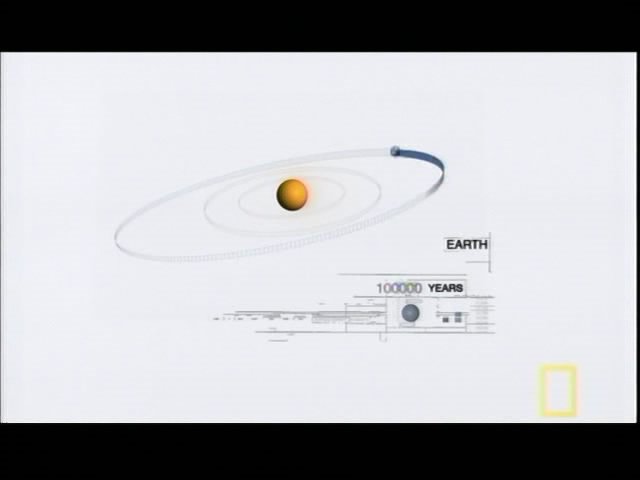
A while ago National Geographic aired a new episode of Naked Science titled Big Freeze, one that has something to do with the Earth's climate instead of the entire universe's.
To sum it up, we live in a time called the interglacial period when the world doesn't freeze over like during an ice age, allowing civilizations to flourish. Many scientists believe though that an ice age is, judging from past climate patterns for thousands of years, overdue.
The good news is an ice age takes time to emerge. The graduate change and our ability to adapt to new environments are not exactly the worst combination.
The bad news is along with these studies, climatologists discovered something very strange- the extended period of warm climate that we benefit from, is everything but normal. It's indeed a freak of nature. Long story short, there was a bizarre absence of freezes that should have hit during the interglacial but haven't. When it arrives finally the world will go through a rapid and drastic temperature drop crippling or even wiping out the human race.
What can trigger these quick big freezes:
1) volcanic eruption
-volcanic acid reflecting sunlight resulting in dropping temp, also likely to effect food supply causing famines, civil disobedience, eventually wars and/or anarchy.
2) global warming
-either a man-made process or natrual, the larger amont of fresh water from melting ice sheets pouring into the ocean each year is a fact, which slows the Great Ocean Conveyor, a natural oceanic system that adjusts global temperatures.
Doomed or not, What're our chances?
Scientists say that there is a 50% chance we will see a big freeze in the next 100 years.
Now on surviving it:
How life survived the big freeze
Download Big Freeze on here
Recent evidence suggests we might be heading towards a Big Freeze with the power to cause a global catastrophe with mass extinctions. This new freezing climate could hit us far sooner than we think with little or no warning. The next ice-age may stillbe in the distant future but ironically could Global Warming be a possible trigger that will accelerate climate change? Naked Science examines what may cause temperatures to plummet and how abrupt climate change could spell disaster for Earth.
Sunday, January 15, 2006
scientist in you
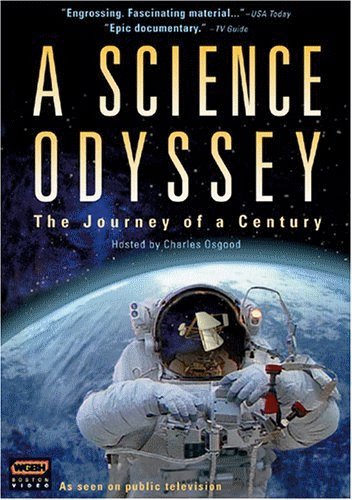 Curiosity kills the cat, but before it does, it rewards him with scientific gratification. It might well be worth the death. And then there are others who would pick up from where it's left off. If it weren't for curious people in the world doing tedious seemingly valueless experiments, which in more cases than not, are just that, there would be very little forward mobility in human comprehension of the environments surrounding us. Scientific discoveries are a social process. Our science odyssey will never end.
download the 10 part series on MVGroup.
Part 1&2 Origins
The earthquake that shatters San Francisco in 1906 opens a century of explosive discoveries and debates in the earth sciences. See the Earth through the eyes of Alfred Wegener, who struggles to convince the scientific establishment that continents move. Watch as radiodating techniques increase Earth's estimated age - sometimes inspiring skepticism if not outrage. Meanwhile, a parallel upheaval rumbles the life sciences, where new evidence of our primate ancestors and the discovery of DNA's structure stir up controversies of their own. Ancient fossils and living cells give up their secrets to change our view of our species and the mechanics of life.
Highlights include: Age and origins of the Earth. Volcanoes. Earthquakes. Alfred Wegener. Continental drift. Harry Hess. Plate tectonics. The Himalayas. The formation of mountains. Religion, myth, and science. Human origins. The Scopes trial. The legacy of Charles Darwin. Mutation and adaptation. Paleoanthropology. Louis and Mary Leakey. Donald Johanson and "Lucy." Primordial soup. DNA. Origins of life.
Part 3&4 Mysteries of the Universe
At the beginning of the century, discoveries about the hidden workings of the everyday world suggest all is not as it seems. Quantum theory, relativity, nuclear power, and clues about the birth and death of the universe have rocked our deepest beliefs. Mysteries of the Universe journeys from the subatomic world of the atom to the farthest reaches of space and time, and into the laboratories of the men and women whose work has forever altered physics and astronomy.
Highlights include: George Ellery Hale and the Mount Wilson telescope. Henrietta Leavitt. Edwin Hubble. Albert Einstein. Niels Bohr and the Quantum Theory of Matter. The structure of the atom. Jocelyn Bell and pulsars. The size of the universe. The Big Bang. Black holes. Quarks. Super colliders. Unified field and string theories.
Part 5&6 In Search of Ourselves
It's all in the genes. Or is it? In Search of Ourselves traces the pendulum swing of psychological theory from nature to nurture and back again. Case studies, classic experiments, and research on the brain blaze this trail of discovery, revealing what we have learned about ourselves and what still remains a riddle. We also see the dark side of our faith in the perfectibility of human nature, as scientific ideas are twisted to fit political agendas. In Search of Ourselves is a story of the lessons learned, as well as the ways which we have learned them. As the century draws to a close, human behavior remains an irresistible frontier.
Highlights include: Jean-Martin Charcot and hysteria. Sigmund Freud. Psychoanalysis. Shell shock. IQ tests. Eugenics. Scientist-turned-ad-man John B. Watson and the behaviorist movement. Conditioning. B. F. Skinner. Harry Harlow and the power of love and comfort. Frieda Fromm Reichmann and the treatment of schizophrenia at Chestnut Lodge. Mental institutions. Drug therapy. Alzheimer's disease.
Part 7&8 Matters of Life and Death
From the days of house calls to the era of high-tech hospitals, Matters of Life and Death tracks the passion and determination of medical science in the twentieth century. Dramatic experiments, the politics of science, and races against the clock form a backdrop to the discovery of new treatments, antibiotics, and advances in surgery and medical technology that have lengthened our lives and force us to rethink our assumptions about life and death.
Highlights include: Bubonic plague. Joseph Goldberger and pellagra. Frederick Banting, Charles Best, James Collip and insulin. Chronic illness. Alexander Fleming and penicillin. Howard Florey and Ernst Chain. Open heart surgery. Kidney and heart transplants. The mechanics and politics of organ transplantation. Cancer.
Part 9&10 Bigger, Better, Faster
Our science odyssey starts in a modest, turn-of-the-century home. Inklings of change are evident, but are the residents prepared for the technological transformation the coming years will bring? The startling view of gravity-defying humans flying free from the earth is just an introduction to the surprises ahead. And each new technological development, whether a car for the masses or a worldwide computer network, brings profound changes to homes across the country and the globe - and to the lives of the people in them.
Highlights include: The Wright brothers. France and the U.S. compete for the first in flight honors. Cal Rodgers, the "Vin Fiz" Flyer, and the first trans-American flight. The airplane goes to war. Henry Ford and the Model T. Mass production - and consumption. Technology pushes social change. Radio. The 1939 World's Fair. Breaking the polymer barrier. Wallace Carothers and nylon. The Whirlwind. NASA and the space race. The Internet and the World Wide Web.
Thursday, December 22, 2005
Alone in the Wilderness
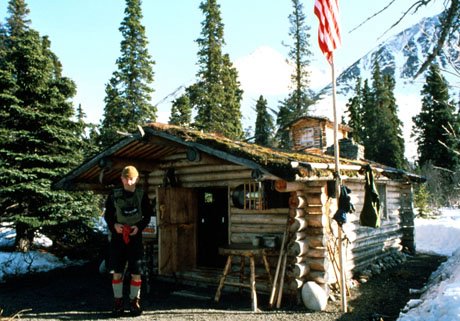
taken from imdb.com
Documentary tells the story of Dick Proenneke who, in the late 1960s, built his own cabin in the wilderness at the base of the Aleutian Peninsula, in what is now Lake Clark National Park. Using color footage he shot himself, Proenneke traces how he came to this remote area, selected a homestead site and built his log cabin completely by himself. The documentary covers his first year in-country, showing his day-to-day activities and the passing of the seasons as he sought to scratch out a living alone in the wilderness.taken from amazon.com
"Alone in the Wilderness" is the story of Dick Proenneke. To live in a pristine land unchanged by man... to roam a wilderness through which few other humans have passed... to choose an idyllic site, cut trees and build a log cabin... to be a self-sufficient craftsman, making what is needed from materials available... to be not at odds with the world, but content with one's own thoughts and company... Thousands have had such dreams, but Dick Proenneke lived them. He found a place, built a cabin, and stayed to become part of the country. This video "Alone in the Wilderness" is a simple account of the day-to-day explorations and activities he carried out alone, and the constant chain of nature's events that kept him company.
There is no way I can compare my curent lifestyle to what Dick started in his 50's for some 30 years up until 1998, but that must be what it's like to search for an answer. Being away from all humans for so long, what courage and determination! People like Dick Proenneke and Ellen MacArthur inspire me. The farther away from civilization, the truer the view.
torrent link for "Alone in the Wilderness": MVGroup
about Ellen MacArthur: MacArthur sails into record books
Sunday, November 20, 2005
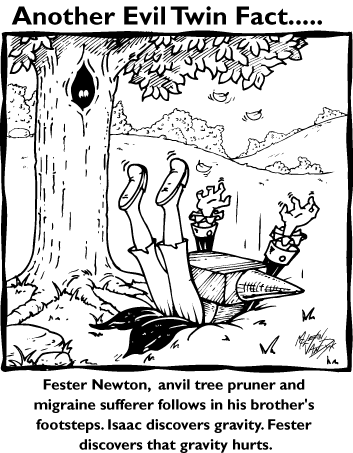
Isaac Newton
the alchemist!
Nova Newton's Dark Secret:
Nova website: here
Magic or Mainstream Science?
An interview on Newton's alchemy with historian Bill Newman
Wiki's page on alchemy:

comment on the program: Nova barely scratches the surface on this one, making one wishing for more.
torrent link
Nova Newton's Dark Secret:
Nova website: here
Magic or Mainstream Science?
An interview on Newton's alchemy with historian Bill Newman
Wiki's page on alchemy:
Alchemy is an early protoscientific practice combining elements of chemistry, physics, astrology, art, semiotics, metallurgy, medicine, and mysticism. These practices were usually used outside of what is now known as the scientific method, however, alchemy can be regarded as the precursor of the modern science of chemistry prior to the formulation of the scientific method.Wiki's page on Philosopher's Stone:
The most well known goal of alchemy was the transmutation of any metal into either gold or silver. Alchemists also tried to create a "Panacea", a remedy that supposedly would cure all diseases and prolong life indefinitely. The "Philosopher's stone" was believed to be an essential ingredient in these goals. This mythical substance was hypothesized to have the ability to do both. A third goal of many alchemists was creating human life.
The Philosopher's stone, a longtime "holy grail" of Western alchemy, is a mythical substance that supposedly could turn inexpensive metals into gold and/or create an elixir that would make humans younger delaying death. The Great Work, or Magnum Opus, refers to the quest for this stone. In addition, making the Philosopher's Stone is understood to confer a type of initiation upon the maker, and this initiation is the proper culmination of the Great Work.It is also known as the materia prima, or the magnum opus.
comment on the program: Nova barely scratches the surface on this one, making one wishing for more.
torrent link
Monday, November 14, 2005
Ice Hotel


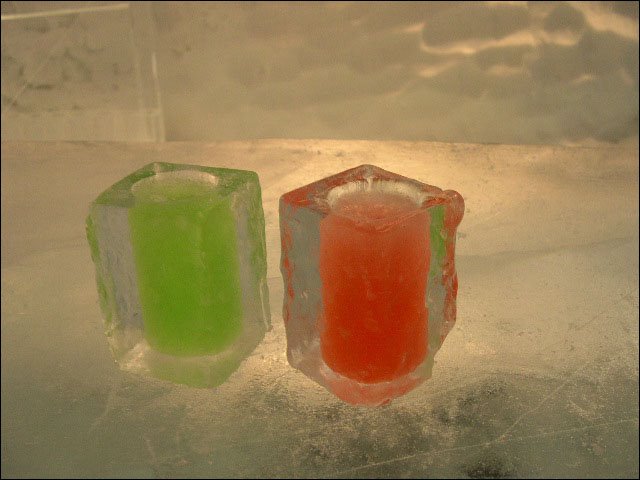 Intro taken from its website:
 In Swedish Lapland, 200 km north of the Arctic Circle, lies the village of Jukkasjärvi on the River Torne. Jukkasjärvi in Saami (Lappish) means "meeting place ", which is what the former Saami village has been for half a millennium. ICEHOTEL AB, the company that runs ICEHOTEL, has worked with tourism since the mid 1970s, and offers a wide range of activities such as white-water rafting, fishing, visits to a Saami camp, reindeer and dogsledding tours. Before ICEHOTEL, very few tourists came to Jukkasjärvi during the long, dark, cold and snowy winters. In 1989 however, Jukkas AB (now ICEHOTEL AB) decided to look upon winter as an asset instead.
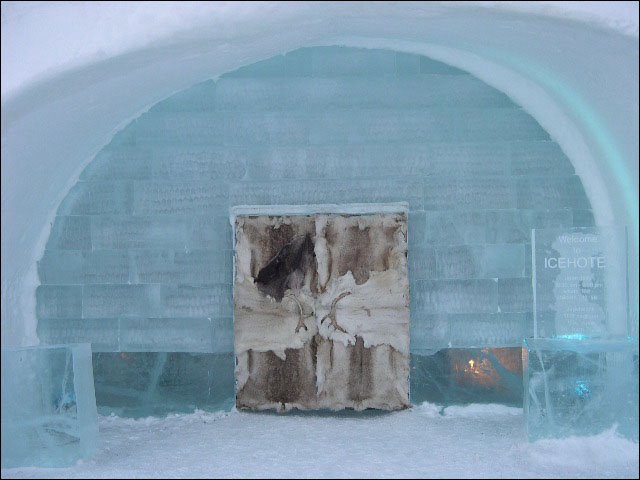 A review from an English traveler:
 Finally been & done it! It took a hell of a lot of organising, but tying everything up before going was well worth it. Doing it outside a travel agent also paid off big time! If you book the package through an agent you are tied to the trips they include. Often too long & before your ready & have acclimatised. You need 3 days. A good idea if you make your stay in the Ice Hotel itself, your 2nd night. You can then look at the Suites when your shown around & request one particular that you like. It may not be available but you could be lucky. It is despite the extra cost a very good idea to have a warm hotel room (Kaamos) as well as the Ice Hotel. This gives you somewhere to rest & relax, otherwise your things are in a locker in the warm,changing,Loo area. The night you stay in the Ice Hotel you can get your room after 6.30 pm all visitors leave by then. However it is Minus 5 & you can't take your things in your room as they would freeze. So you find most people busy with activities or The Vodka Ice Bar until it is time to sleep. You then collect a sleeping bag & liner to take to your room. You undress in the changing room & make a b-line for your bed & bag! It is quite comfortable & snug once in, but the mattress is hard!!! That actually bothered me much more than the cold. If you haven't slept ina sleeping bag since you were a child? It is a little claustrophobic, but the rooms are lovely. Good idea to sit warmly clothed & lie looking around "it is lovely" We had a suit, & it was worth the extra money. We had a drape of Ice with patterned snow flakes & free Fall written in with the bed cut in to the wall around 4 feet off the ground. It all glistens & sparkles & is an experience. You can turn your light off at the edge of the bed & they wake you between 7.30-8am with a hot fruit drink a little like Ribena. Booking the Hot tub privately is also a good idea. sitting in hot water with minus 30 plus outside & often snowing "is lovely" looking at the stars. Make sure you get the temperature right before you leap in & be aware it is much hotter at the bottom than on the surface! I got roasted & had to get out while my partner spent 20 mins pilling Ice & snow in to get the temperature down. Add more logs after your in & adjusted. The trips are very very expensive for us. ( the Swedes earn around 4 times our salary, so its about the same as it would be here for us, but as we are on much smaller incomes, it feels hard. An hour & a half Snowmobile (not to be missed!) is around £95.00 The Hot tub private around £75 (book last of the day & they will leave you until whenever. We came out around 3 in the morning, no one bothered us. The same with the Dog Sled again around £80-90 I think for an hour & a half. The 3 & a half hour trips & overnights out are much more expensive again. But your away from the Ice Hotel for a long time. OK if you have 3 days, but with 2 your not going to see it all. Better you book the outings the days after you arrive, you will have accustomed yourselves to the temperature better & got the feel of how much clothing you need. They say 3 layers. Believe me if your Dog Sledding Snowmobile you need more, especially on your feet & hands. You will need a face mask! Scarf around your chest & at least 2 pairs of socks. The little heat pads you get in the ski shops are a good idea, especially if you suffer from cold extremities!.. A meal for 2 in the restaurant will cost the best part of £100 with no booze! There is nothing else in the town. Apart from a little supermarket & believe it or not a Hamburger take away caravan! But at minus 30 ish it's gonna be cold before you start.! We bought stuff in the supermarket & made sandwiches Hot chocolate & cake in our hotel room. There are tea/coffee things & a hairdryer. The restaurant closes at around 11pm so the night you go to the Theatre "if you do" you won't get in to the restaurant. They are helpful they will make & leave sandwiches for you. The menu is mainly Fish & Reindeer. My partner won't eat either. they did Chicken for him on request. No problem Breakfast is wonderful the bread is fresh made with fresh yeast, there is so much, if you eat well, to be honest you really don't need much else!... We went in to Kiruna, there is very little there. Nothing of any particular interest. A supermarket a linen.tableware shop, a very nice tea rooms with good food & a nice Coffee/Chocolate/gift shop run by an extremely sweet Gay guy who is so, so helpful & very amusing! It cost around £20 each way in a cab although there are buses. Believe me you don't want to stand around waiting in that weather! In the Village by the Ice Hotel there is a nice little church & beside there a plot of land the Sami people keep a few tents & reindeer. Sadly at a distance these were the only ones we saw. You need to go up in the the mountains with them on a trip to see more. Beware very cold. Hotel room are very warm & cosy, lovely & clean. When you start getting booted & suited to go out "it will become unbearable!!!" As you dress open the windows & doors let it air & freeze down to make it comfortable to dress. As you leave shut up again It will be cosy again when you get back. Drinks are around £7 a time, ice bar or bar anywhere in fact. Beer more than £5, so be prepared. Just to let you know we went to Stockholm on the way. The round trip plus the Grand 5 star Hotel was around 4oo each which was great Stockholm very nice . We will definitely go again & spend longer, but it made a good start to the Kiruna trip & also helped greatly with cost. Thistle Hotel groups tour operator on-line lets you book round trip with days away! So they did our round flights although we only stayed with them for the 2 days in Stockholm & then went off to Kiruna buying the tickets Stockholm-Kiruna-Stockholm. Great time. I would do it again & change little that I organised!. There is a train to Kiruna from Stockholm over night & I think I would add a day to do that next time "simply for the views!" Had too much trouble finding out how to book this time. But I think would be worth the try. Hope this helps. Sam
Unlike the visitors, I'm really interested in actually living there. Imagine with the vehicles I have (in my dream), especially the WRC STi, I can slide on ice for a very long time. A constant subzero temperature, now that warms my heart.
ICEHOTEL English page
360 degree panoramic view
more reviews from other travelers
Pictures from websites, here and here.
Saturday, October 01, 2005
Future of Food

quotes from documentary:
We're losing genetic diversity. We're losing intellectual diversity that we're going to find very very needed in the future...
One of the problems that the [agricultural] biotechnology has is it has nothing for the American consumers. There's nothing there...
This is one of the most disturbing trends in economics...
Without proper labeling, consumers will not be able to make informed decisions...
Food is one of the most intimate things we do. And if we don't have any choices about that, I think that's a very troubling scenarios.
It's up to you...
thoughts:
I most certainly find it very disturbing that 80% of the food you can buy in the supermarket is controlled by no more than a handful of multinational corporations. They are patenting everything, genetically engineered or not, including generation-old seed developed by local farmers. Sooner or later they will own the entire food supply of the world.
Foods that haven't been labeled GE (genetically engineered) or GM (genetically modified) don't mean they aren't because the current law says they don't have to be. They are developed in labs, as opposed to over decades of tests and proven facts that they're safe for the consumers and their ecosystems. From a distance it seems no harms have been done. We do expect things to be more from the lab, less from mother nature. But if you take a closer look, it's worrisome where it's headed.
On the other hand, the government hardly legislates for the people anymore. These officials who decide the future of food production happen to be the same executives found under said corporations. A number of them work or have worked for the FDA (U.S. Food and Drug Administration) or EPA (U.S. Environmental Protection Agency).
Of them all, the example of Monsanto really demonstrates this close tie between the various branches of the government and their supposedly enemies.
Linda Fisher: (she went back and forth between these jobs four times)
Executive Vice President for Monsanto Corporation
EPA Assistant Administrator for the Office of Policy, Planning and Evaluation (OPPE)
Justice Clarence Thomas
Supreme Court Justice
Monsanto's lawyer for regulation affairs
Mickey Kantor
Secretary of Commerce
Board of Directors, Monsanto
Lidia Watrud
Advisor to the U.S. EPA
Biotech Researcher, Monsanto
Ann Veneman
Secretary of Agriculture
Board of Directors, Calgene, purchased by Monsanto
Michael Friedman
Acting Commissioner, FDA
Senior VP, GD Searle, a division of Monsanto
William Ruckelshaus
Chief Administrator, EPA
Monsanto Board Member
Donald Rumsfeld
Secretary of Defense
President of Searle, subsidiary of Monsanto
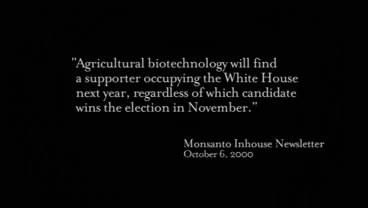
related reading:
wiki: Genetic Engineering
genetically engineered food
Mothers for Natural Law
download:
The Future of Food
IMDb:
The Future of Food (2004)
Thursday, June 23, 2005
"What We Still Don't Know"
is a science series that was broadcast around the end of last year on Channel 4 in Britain. It asks three really basic but hard questions: Are we alone? Why are we here? Are we real? (three programs, one question each)
The title appears overly clichéd (I still know what you did last summer, anybody?) but that doesn't affect the quality of it, though again they could do better without the ill-designed official web pages on Channel 4. They ought to start hiring professionals. Wouldn't you think they could have selected a more decent picture?
This, for example, would be a better-sounding title: Chart the Uncharted: Cosmobiology Incognita. Please ask me before borrowing this title from Utoddpia.
Martin Rees is the host. Direct quote from him, "we are literally the ashes of long-dead star."
Download the three videos here, torrent file.
Edit: Am I not undersanding what they're talking about, or are they really sometimes just not the geniuses they appear to be? In the third program the cosmologists/physicists are having a tough time disproving the need of a superior being/creator to logically explain things. They keep saying that if any of the values or numbers in the physical world changes 0.0000000000000000000000000001% we couldn't have evolved. Since when did we decide we'd mess up the order of things? The universe obviously precedes us, a living thing. WE adopt to the environment, NOT the other way around. If a different set of numbers and values were given, living things simply take up different sizes and shapes to survive in it.
Hmm. We might just be in a simulation called Life.
The title appears overly clichéd (I still know what you did last summer, anybody?) but that doesn't affect the quality of it, though again they could do better without the ill-designed official web pages on Channel 4. They ought to start hiring professionals. Wouldn't you think they could have selected a more decent picture?
This, for example, would be a better-sounding title: Chart the Uncharted: Cosmobiology Incognita. Please ask me before borrowing this title from Utoddpia.
Martin Rees is the host. Direct quote from him, "we are literally the ashes of long-dead star."
Sir Martin John Rees (born June 23, 1942) has been Astronomer Royal since 1995 and Master of Trinity College, Cambridge since 2004. Educated at Shrewsbury School and Trinity College, Cambridge, he studied in the United States before taking a professorship at Sussex University. Returning to Cambridge, he held the post of Plumian Professor until 1991 and was director of the Institute of Astronomy there.
Rees won the Gold Medal of the Royal Astronomical Society in 1987. He was knighted in 1992 and won the Bruce Medal in 1993. He was awarded the Henry Norris Russell Lectureship of the American Astronomical Society in 2004. In 2005 he was awarded the prestigious Crafoord Prize along with James Gunn and James Peebles.
Download the three videos here, torrent file.
Edit: Am I not undersanding what they're talking about, or are they really sometimes just not the geniuses they appear to be? In the third program the cosmologists/physicists are having a tough time disproving the need of a superior being/creator to logically explain things. They keep saying that if any of the values or numbers in the physical world changes 0.0000000000000000000000000001% we couldn't have evolved. Since when did we decide we'd mess up the order of things? The universe obviously precedes us, a living thing. WE adopt to the environment, NOT the other way around. If a different set of numbers and values were given, living things simply take up different sizes and shapes to survive in it.
Hmm. We might just be in a simulation called Life.
Subscribe to:
Posts (Atom)